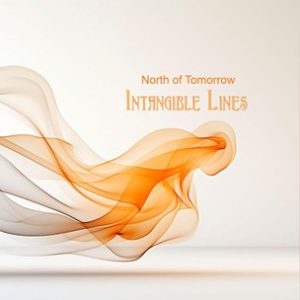
North of Tomorrow are musicians with weathered hands and well-worn hearts who’ve played around enough corners of America to know that the map never tells the real story. On their latest record, “Intangible Lines,” the Phoenix-based trio delivers a confident collection that is part experiment, part memory, and all musicianship. The album leans into genre without fear, then abruptly swerves, a move only possible with the assurance that comes from decades of collaboration and living.
Take “Big Wide World”—one of the album’s shining jewels. The track is built on gentle, atmospheric layers that seem to swirl around a sense of possibility and wistfulness. Vocals float in with a delicate confidence, singing of a “big wide world” and its endless permutations of color, mood, and discovery. The song’s lyricism feels both beautifully abstract and totally direct, capturing the way experience broadens and deepens with age. Instruments weave together with confidence: guitars chime and keys glint, all supported by bass lines that ground the tune without weighing it down. It keeps shifting texture, offering subtle details that only make themselves known after repeated listens. It’s a neat reflection of the band itself, as if their years have taught them not to show all their cards at once.
“Taking on Water,” in contrast, reveals a different side of North of Tomorrow’s vision. This is the record at its most world-weary, with vocals that feel heavy—in the best sense—with the ache of endurance and perseverance. It talks about struggle, storms, and late-night worries, with lines about overdue payments and storms rolling in after midnight. There’s a crispness to the arrangement, every instrument doing just enough—nothing is wasted, nothing showy. The production is clear but lived-in, the drums steady and the guitars expressive but not overplayed. It’s a tune for those who’ve weathered a few storms and are still standing, still bailing out the boat.
And then there’s “Windward,” a track that perfectly channels the album’s sense of motion and searching. Here, North of Tomorrow evokes a breezy, open sound, the kind that calls to mind journeys into the unknown rather than arriving at any specific destination. The musicianship is quietly dazzling, every part planned but still breathing with life—something that can only happen when the players trust each other, and the song, enough to leave room for space and subtlety. The production shines here, too, with each instrument given just the right room to sparkle and drift.

Throughout “Intangible Lines,” what impresses most isn’t any one genre or technical flash, but the steady professionalism honed over years and thousands of hours in rehearsal rooms and on stages both big and small. There’s a refusal to chase current trends—the songs are modern but never try-hard, rooted instead in what sounds and feels good to the band themselves. That confidence makes even the album’s boldest experiments land; one minute, it’s a jazz-tinged groove, the next, a straight-up alt-rock anthem, the changes always feeling earned and organic. And while the band isn’t chasing trends, their music is gaining traction on the airwaves, recently climbing the Top 30 chart at WLFR and earning spins at key college stations like WPRB in Princeton and CJUM in Winnipeg.
If the album has a secret, it’s the palpable sense of conversation between the band members. North of Tomorrow works like an old-school collective, built on trust and the willingness to surprise not just the listener, but each other. Alongside mainstays Brian Mueller, Gary Adrian, and Stephen Rogers, a global cast of side musicians contributes richness and unpredictability. Yet, the core vision never falters. There are no trendy filters or overbearing production tricks—just mature songwriting, clear arrangements, and a restless creative spirit.
Every time it plays, it promises something fresh—another color in the swirl, another line on the map waiting to be drawn, and perhaps, a small nudge to go out and find your own big, wide world.
—